For decades, theatergoers and literature students have debated the true nature of the relationship between Brick and Skipper in Tennessee Williams’ masterpiece. If you are confused by the subtle hints, coded language, and intense emotional dynamics, you are not alone. Many readers ask, “Is Brick gay in Cat on a Hot Tin Roof?“ to understand the tragic core of the play. This article dives deep into the text, historical context, and authorial intent to provide a clear, nuanced answer.
The Ambiguity of Brick’s Sexuality
To understand whether Brick is gay, we must first look at how Tennessee Williams constructed the character. Brick Pollitt is not a caricature; he is a complex figure trapped by societal expectations of 1950s masculinity.
Williams never explicitly states that Brick is homosexual in the traditional sense. Instead, he presents a man who experienced a profound, possibly romantic, love for his friend Skipper that society could not name or accept. This ambiguity is intentional. It forces the audience to confront the destructive power of repression.
The tension in the play does not come from a simple “coming out” story. It comes from Brick’s inability to process his feelings within a rigid, heteronormative framework. He is not necessarily gay in the modern identity-politics sense, but he is certainly queer in his deviation from expected male behavior and his deep emotional bond with another man.
Did Brick and Skipper Have a Sexual Relationship?
One of the most common questions users ask is whether the relationship between Brick and Skipper was physically sexual. The text provides evidence for both sides, but leans heavily toward an emotional rather than physical connection.
The Case for Emotional Intimacy
- Exclusive Bond: Brick describes his friendship with Skipper as the only “true” thing in his life. He contrasts this with his marriage to Maggie, which he views as transactional.
- Jealousy and Betrayal: Brick’s anger stems from Skipper’s attempt to confess his love. Brick rejects this confession not because he hates Skipper, but because he cannot face the implication of what that love means.
- The Phone Call: The pivotal moment in the play is the phone call where Skipper tries to admit his feelings. Brick hangs up. This act destroys Skipper, leading to his alcoholism and eventual death.
The Case Against Physical Relations
- Brick’s Marriage: Brick is married to Maggie and has no indicated history of other male partners.
- Societal Context: In the 1950s South, overt homosexuality was dangerous. Williams often used “subtext” to bypass censorship. If they had a physical affair, it would likely have been more explicit in the stage directions or dialogue, given Williams’ usual boldness.
- Skipper’s Confession: Skipper’s need to confess suggests that the boundary had not yet been crossed physically, but that the emotional line had been blurred beyond repair.
Most scholars agree that while they may not have been sexual partners, their relationship possessed the intensity and exclusivity typically reserved for romantic love.
Tennessee Williams’ Intent and Historical Context
To answer “Is Brick gay in Cat on a Hot Tin Roof?”, we must look at the author himself. Tennessee Williams was a gay man living in a time when homosexuality was criminalized and stigmatized.
Williams often infused his works with queer subtext. He used characters like Brick to explore the pain of closeted existence. However, he also resisted labeling his characters strictly. He believed in the fluidity of human desire.
According to literary critics, Williams intended Brick to represent the tragedy of denied truth. Whether Brick is technically “gay” is less important than the fact that he is incapable of honesty. His alcoholism is a direct result of suppressing his true feelings for Skipper.
“The world is violent and mercurial—there is nothing more stable than a good lie.” — Tennessee Williams
This quote reflects the environment Brick inhabits. He chooses the “lie” of heterosexual normalcy over the “truth” of his complex emotions.
Comparison: Brick vs. Traditional Heterosexual Masculinity
To better understand Brick’s deviation from the norm, let’s compare his traits with the expected masculine ideals of the 1950s.
| Trait | Traditional 1950s Masculinity | Brick Pollitt |
|---|---|---|
| Emotional Expression | Stoic, unemotional | Volatile, deeply sensitive, prone to despair |
| Friendship | Camaraderie, sports, drinking | Deep, exclusive, emotionally dependent |
| Marriage | Duty, procreation, status | Viewed as a trap, lacks genuine connection |
| Conflict Resolution | Action-oriented, decisive | Avoidant, uses alcohol to escape |
| Sexual Identity | Clearly heterosexual | Ambiguous, repressed, conflicted |
This table highlights why Brick feels so alienated. He does not fit the mold, yet he tries desperately to maintain the appearance of fitting in. This dissonance is the source of his suffering.
The Role of Maggie in Brick’s Sexuality
Maggie, the “Cat,” is often seen as the antagonist to Brick’s truth. However, she is also a victim of his repression.
Maggie suspects that Brick’s indifference to her is due to his attachment to Skipper. She says, “I know you’re not interested in me sexually.” Her frustration is not just about sex; it is about being shut out of Brick’s inner world.
Brick’s inability to engage with Maggie is a symptom of his unresolved feelings for Skipper. He cannot transfer his emotional capacity to his wife because it is still locked away with his dead friend. This dynamic reinforces the idea that Brick’s primary emotional orientation was toward men, specifically Skipper, even if he did not act on it physically.
Critical Interpretations Over Time
Since its premiere in 1955, interpretations of Brick’s sexuality have evolved.
- 1950s–1970s: Critics often viewed Brick as simply depressed or alcoholic. The gay subtext was frequently ignored or censored in early productions.
- 1980s–1990s: With the rise of queer theory, scholars began to explicitly analyze the homoerotic tension between Brick and Skipper.
- 2000s–Present: Modern productions often lean into the queer reading. Directors may stage the interactions between Brick and Skipper (in flashbacks) with more intimacy to highlight the romantic nature of their bond.
For a deeper understanding of the play’s historical reception, you can refer to the detailed analysis on Wikipedia.
FAQ Section
1. Does Tennessee Williams confirm Brick is gay?
No, Williams never explicitly labeled Brick as gay. He preferred ambiguity, allowing audiences to interpret the depth of Brick’s feelings for Skipper. However, Williams acknowledged the homoerotic subtext in interviews later in life.
2. Why does Brick drink so much in the play?
Brick drinks to numb the pain of his guilt and grief. He feels responsible for Skipper’s death because he rejected Skipper’s confession of love. Alcohol is his escape from the “mendacity” (lies) of his family and his own internal conflict.
3. Is Skipper in love with Brick?
Yes, the text strongly suggests that Skipper is in love with Brick. Skipper’s attempt to confess his feelings over the phone is the catalyst for the play’s central conflict. His subsequent decline and death are results of Brick’s rejection.
4. How does the film adaptation differ from the play regarding Brick’s sexuality?
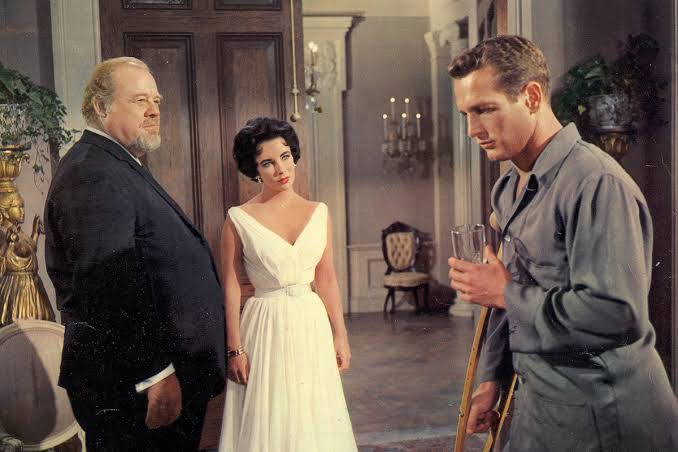
The 1958 film starring Paul Newman significantly toned down the homoerotic subtext due to the Hays Code. In the movie, Brick’s relationship with Skipper is portrayed more as a standard friendship gone wrong, removing much of the queer coding present in the original stage play.
5. Can Brick be considered bisexual?
Some modern interpretations suggest Brick could be bisexual, as he is married and has children. However, his lack of sexual interest in Maggie and his exclusive emotional devotion to Skipper lean more toward a repressed homosexual orientation or asexuality resulting from trauma.
6. What is the significance of the title “Cat on a Hot Tin Roof”?
The title refers to Maggie, who is like a cat on a hot tin roof—restless, uncomfortable, and trying to find a place to land. It symbolizes the tension and discomfort in the household, driven largely by Brick’s unresolved secrets and sexuality.
Conclusion
So, is Brick gay in Cat on a Hot Tin Roof? The answer is not a simple yes or no. Brick is a character defined by repression. While he may not have engaged in sexual acts with men, his emotional heart belonged to Skipper. In the context of the 1950s, this deep, exclusive male bond, coupled with his rejection of heterosexual intimacy, aligns with a queer reading of the character.
Tennessee Williams crafted Brick to show the devastating cost of living a lie. Whether we label him gay, bisexual, or emotionally conflicted, the core truth remains: Brick’s tragedy is his inability to accept love in its truest form.
Understanding this nuance enriches the experience of reading or watching the play. It transforms Brick from a mere alcoholic into a poignant symbol of societal constraint.
Did this analysis help clarify your understanding of Brick’s character? Share this article with your book club or theater friends to keep the discussion going!