Having a large tree branch hanging over your roof can feel like a ticking time bomb. Every gust of wind or heavy rainstorm brings a wave of anxiety about potential damage to your shingles or even the structural integrity of your home. If you are asking yourself, “Do I have to cut tree down going over roof,” you are not alone; this is one of the most common dilemmas for homeowners in the US.
The short answer is: Not always. Complete tree removal is often a last resort. In many cases, strategic pruning or cabling can mitigate the risk while preserving the beauty and environmental benefits of your tree. However, ignoring the issue is never an option. Below, we will explore the risks, legal considerations, and professional solutions to help you make an informed decision that balances safety with cost-effectiveness.
Assessing the Risk: When Is It Dangerous?
Before calling a crew with chainsaws, you need to evaluate the specific threat level. Not all trees over roofs are created equal. The danger depends on the tree’s health, species, and proximity to your home.
Signs of Immediate Danger
You should consider immediate action if you notice any of the following red flags:
- Dead or Dying Branches: Known as “widowmakers,” these can fall without warning.
- Cracks or Splits: Visible fractures in the main trunk or large limbs.
- Leaning Trunk: A sudden lean may indicate root failure.
- Fungal Growth: Mushrooms at the base suggest internal decay.
According to the USDA Forest Service, urban trees provide significant economic and environmental benefits, including energy conservation and stormwater management. Therefore, preservation should be the primary goal unless safety is compromised.
The “Touch Test”
A general rule of thumb used by arborists is the distance factor. If branches are physically touching your roof, they are causing abrasion to your shingles every time the wind blows. This friction wears down the protective granules on asphalt shingles, leading to premature leaks. Even if the tree is healthy, physical contact requires intervention.
Alternatives to Full Removal: Pruning and Cabling
Many homeowners assume that if a tree is problematic, it must go. This is a costly misconception. Professional arborists often recommend less invasive methods first.
Crown Reduction and Thinning
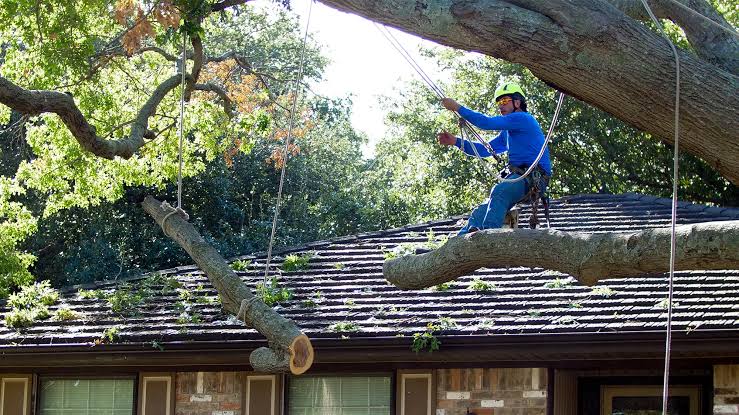
Crown reduction involves selectively removing branches to reduce the weight and wind resistance of the tree. This technique pulls the canopy back from the roofline without killing the tree.
- Benefit: Maintains the tree’s health and aesthetic.
- Cost: Typically 10–20% of the cost of full removal.
- Frequency: Needs maintenance every 3–5 years.
Cabling and Bracing
For trees with weak unions (where two large stems meet), steel cables or rods can be installed to provide structural support. This prevents limbs from splitting apart during storms.
- Best For: Multi-stemmed trees like oaks or maples.
- Limitation: Does not fix decay; only supports structure.
| Method | Cost Estimate | Lifespan | Best Use Case |
|---|---|---|---|
| Pruning | $300 – $800 | 3-5 Years | Branches touching roof |
| Cabling | $500 – $1,500 | 10+ Years | Weak branch unions |
| Removal | $1,000 – $3,000+ | Permanent | Dead/diseased trees |
Note: Costs vary significantly based on tree size, location, and accessibility.
Legal and Insurance Implications
Understanding your liability is crucial before making any cuts. In the US, property laws vary by state, but general principles apply.
Who Owns the Tree?
If the tree trunk is entirely on your property, you are responsible for its maintenance. If it straddles the property line, ownership may be shared. Cutting a neighbor’s tree without permission can lead to significant legal penalties, sometimes triple the value of the tree.
Homeowners Insurance Coverage
Does insurance cover tree removal? It depends on the event.
- Covered: If a healthy tree falls on your house due to a named peril (like a hurricane or lightning strike), your policy usually covers the damage and removal.
- Not Covered: If a dead or diseased tree falls because you neglected it, insurance may deny the claim, citing “lack of maintenance.”
Pro Tip: Document the health of your tree with photos annually. This proves you were proactive in case of an insurance dispute.
Step-by-Step: How to Hire the Right Professional
If you decide that action is needed, hiring the right expert is critical. Never attempt to cut large branches over a roof yourself. The risk of falling or damaging the roof is too high.
- Verify Credentials: Look for an ISA (International Society of Arboriculture) Certified Arborist. This certification ensures they have passed rigorous exams on tree biology and safety.
- Check Insurance: Ensure they carry both liability insurance and workers’ compensation. If a worker gets injured on your property and they aren’t insured, you could be liable.
- Get Three Quotes: Prices can vary wildly. Get detailed written estimates that specify exactly what work will be done (e.g., “remove 3 upper limbs” vs. “top the tree”).
- Ask About Cleanup: Does the price include hauling away debris? Some companies charge extra for this.
- Review the Contract: Ensure it includes start and end dates, total cost, and cleanup details.
FAQ Section
1. Can I just cut the branches myself?
While small branches can be trimmed by homeowners, anything over a roofline is dangerous. You risk falling, dropping heavy limbs on the roof (causing more damage than the tree did), or hitting power lines. Professional equipment and training are essential for overhead work.
2. Will cutting the top off the tree (topping) solve the problem?
No. Topping is considered bad arboricultural practice. It stresses the tree, leading to rapid, weak regrowth that is more likely to break in the future. It also makes the tree susceptible to disease and pests. Always opt for crown reduction instead.
3. How close can a tree be to my house?
Ideally, large trees should be planted at least 20 feet away from your home. For existing trees, branches should be kept at least 6–10 feet away from the roof surface to prevent abrasion and allow for proper airflow, which reduces moss and algae growth.
4. Does a tree over my roof increase my home insurance premium?
Not necessarily. However, if an inspector notes dead or hazardous trees, they may require you to remove them to maintain coverage. Proactive maintenance shows insurers you are a low-risk homeowner.
5. What is the best time of year to trim trees over a roof?
Late winter or early spring is generally best, as the tree is dormant. This minimizes stress on the tree and reduces the spread of diseases. However, dead branches can be removed safely at any time of year.
Conclusion
So, do you have to cut the tree down going over your roof? In most cases, no. Complete removal is rarely the first or best option. By opting for professional pruning, cabling, or regular maintenance, you can protect your home from damage while keeping the shade and beauty of your mature trees.
Ignoring the issue, however, is a gamble with your home’s safety and your wallet. Take action now by assessing the tree’s health and consulting a certified arborist. Remember, a small investment in maintenance today can save you thousands in roof repairs tomorrow.
Found this guide helpful? Share it with your neighbors on Facebook or Twitter to help them protect their homes too! Let’s keep our communities safe and green.