Have you ever run your tongue along the roof of your mouth and felt something unexpected? It can be startling to discover irregularities in such a sensitive area, leading to immediate concern about your health. If you are asking yourself, “Why are there bumps on the roof of my mouth,” you are not alone; this is a very common query with a wide range of answers, most of which are completely benign.
In this guide, we will explore the anatomical reasons for these bumps, potential medical causes, and clear steps on how to manage them. We aim to provide you with accurate, empathetic, and actionable information to put your mind at ease or guide you toward professional care if necessary.
Understanding Normal Anatomy: The Incisive Papilla and Rugae
Before worrying about pathology, it is crucial to understand that the roof of your mouth (the palate) is naturally textured. For many people, the “bumps” they feel are simply part of their normal oral anatomy.
The Palatine Rugae
The front part of the hard palate features transverse ridges known as palatine rugae. These are irregular, bumpy folds of tissue that help grip food against the tongue during chewing. Everyone has them, though their prominence varies from person to person. If you have always had these ridges, they are likely just your natural anatomy.
The Incisive Papilla
Directly behind your two front upper teeth, you may feel a small, distinct bump. This is called the incisive papilla. It covers the incisive foramen, a small opening where nerves and blood vessels pass through. This bump is present in almost everyone and can sometimes become irritated by hot foods or aggressive brushing, making it feel more prominent than usual.
According to standard anatomical references, these structures are essential for proper oral function and speech Wikipedia – Human Mouth. Recognizing these normal features is the first step in distinguishing between healthy anatomy and potential issues.
Common Causes of New or Irritated Bumps
If the bumps are new, painful, or changing in appearance, they may be caused by temporary conditions or minor injuries. Here are the most frequent culprits.
1. Burns from Hot Food (Pizza Palate)
One of the most common reasons for sudden bumps on the roof of the mouth is thermal injury. Eating food that is too hot—like melted cheese or hot coffee—can burn the delicate mucous membrane.
- Symptoms: Redness, swelling, blister-like bumps, and tenderness.
- Healing Time: Typically 3–7 days.
- Action: Avoid hot foods and rinse with cool water.
2. Canker Sores (Aphthous Ulcers)
Canker sores are small, shallow lesions that develop on the soft tissues in your mouth or at the base of your gums. Unlike cold sores, they don’t occur on the surface of your lips and aren’t contagious.
- Appearance: White or yellow center with a red border.
- Trigger: Stress, minor injury, acidic foods, or vitamin deficiencies.
- Sensation: Painful, especially when eating salty or spicy foods.
3. Oral Thrush (Candidiasis)
Oral thrush is a fungal infection caused by Candida albicans. It is more common in infants, the elderly, and individuals with compromised immune systems or those who use inhalers.
- Appearance: Creamy white lesions that may bleed slightly when scraped.
- Location: Can appear on the roof of the mouth, tongue, and inner cheeks.
- Treatment: Requires antifungal medication prescribed by a doctor.
4. Allergic Reactions
Food allergies or sensitivities to oral care products (like toothpaste or mouthwash) can cause contact stomatitis. This results in inflammation and small bumps on the palate.
- Common Triggers: Cinnamon flavoring, sodium lauryl sulfate (SLS), or specific fruits like strawberries.
Less Common but Serious Conditions
While most bumps are harmless, some conditions require medical attention. It is important to be aware of these possibilities to ensure timely intervention.
Torus Palatinus
This is a bony growth on the hard palate. It is a benign exostosis (extra bone growth) that develops slowly over time.
- Characteristics: Hard, immovable, and usually painless.
- Prevalence: Affects approximately 20-30% of the population.
- Concern: Generally none, unless it interferes with denture fitting.
Mucoceles
These are fluid-filled cysts that form when a salivary gland duct becomes blocked or damaged. While more common on the lower lip, they can occur on the roof of the mouth.
- Appearance: Bluish or clear, dome-shaped bump.
- Cause: Trauma, such as biting the area or sucking on the palate.
- Outcome: Often rupture and heal on their own, but persistent ones may need removal.
Oral Cancer
Although rare, persistent bumps can be a sign of oral cancer. Early detection is critical for successful treatment.
Red Flags to Watch For:
- A bump that does not heal after two weeks.
- Unexplained bleeding.
- Numbness in the mouth.
- Difficulty swallowing or moving the jaw.
- White or red patches that persist.
If you notice any of these symptoms, consult a healthcare provider immediately.
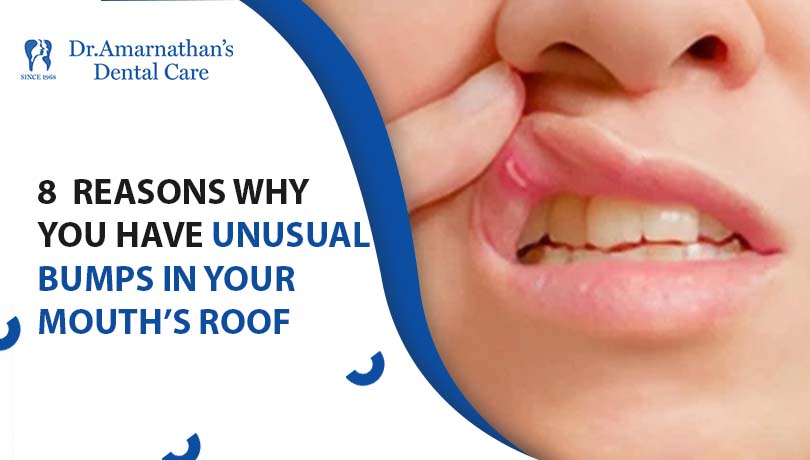
Comparison: Harmless vs. Concerning Bumps
To help you assess your situation, refer to this quick comparison table.
| Feature | Likely Harmless | Potentially Concerning |
|---|---|---|
| Duration | Heals within 7–14 days | Persists longer than 2 weeks |
| Pain Level | Tender initially, then improves | Persistent pain or numbness |
| Texture | Soft or fluid-filled | Hard, fixed, or irregular |
| Change | Gets smaller over time | Grows larger or changes color |
| Other Symptoms | None or mild irritation | Bleeding, weight loss, fever |
How to Treat and Manage Mouth Bumps at Home
For minor irritations, burns, or canker sores, you can manage discomfort at home with these steps.
- Salt Water Rinse: Mix 1/2 teaspoon of salt in a cup of warm water. Swish gently for 30 seconds and spit out. This helps reduce inflammation and keeps the area clean.
- Avoid Irritants: Stay away from spicy, acidic, or crunchy foods that can aggravate the bumps.
- Cold Compress: Suck on ice chips or eat cold yogurt to soothe burns and reduce swelling.
- Over-the-Counter Gels: Use oral gels containing benzocaine for temporary pain relief.
- Hydration: Drink plenty of water to keep your mouth moist and promote healing.
Note: Do not attempt to pop or squeeze any bumps, as this can lead to infection.
When to See a Doctor or Dentist
You should seek professional advice if:
- The bump persists for more than two weeks.
- You experience severe pain that interferes with eating or sleeping.
- You have a high fever or swollen lymph nodes.
- The bump grows rapidly or bleeds without cause.
- You have a history of smoking or heavy alcohol use, which increases oral cancer risk.
A dentist can perform a visual exam and, if necessary, a biopsy to determine the exact nature of the bump.
FAQ Section
1. Can stress cause bumps on the roof of my mouth?
Yes, stress can weaken your immune system, making you more susceptible to canker sores or cold sores (if you carry the virus). Stress can also lead to unconscious habits like grinding your teeth or rubbing your tongue against the palate, causing irritation.
2. Are bumps on the roof of the mouth contagious?
It depends on the cause. Canker sores and torus palatinus are not contagious. However, cold sores (caused by HSV-1) and oral thrush (fungal) can be spread to others through direct contact or shared utensils.
3. How long does it take for a burned roof of the mouth to heal?
Minor burns typically heal within 3 to 7 days. The mouth has a rich blood supply, which promotes rapid healing. If the burn is severe or shows signs of infection (pus, increasing redness), see a doctor.
4. Can vitamin deficiencies cause mouth bumps?
Yes. Deficiencies in Vitamin B12, iron, folate, and zinc have been linked to recurrent canker sores and oral inflammation. Ensuring a balanced diet or taking supplements under medical guidance can help prevent these issues.
5. Is it normal to have a hard bump on the roof of my mouth?
If the bump is hard, bony, and located in the center of the hard palate, it is likely a torus palatinus, which is a benign bone growth. It is normal for many people and usually requires no treatment unless it causes discomfort or interferes with dental appliances.
Conclusion
Discovering bumps on the roof of your mouth can be alarming, but in the majority of cases, they are either normal anatomical features like the incisive papilla or temporary issues like burns and canker sores. By understanding the difference between normal anatomy and potential health concerns, you can better monitor your oral health.
Remember to maintain good oral hygiene, avoid extreme temperatures in food, and stay hydrated. If a bump persists for more than two weeks or is accompanied by other worrying symptoms, do not hesitate to consult a dental professional.
Found this guide helpful? Share it with friends and family on social media to help them understand their oral health better. Your awareness could help someone else find peace of mind!
Leave a Reply