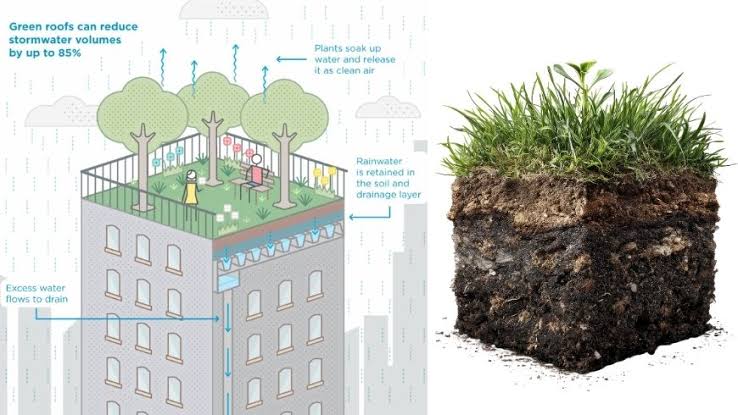
Living in an urban environment often means dealing with heavy stormwater runoff, flooded streets, and rising utility bills. Many homeowners and property managers are looking for sustainable solutions that not only beautify their buildings but also manage water resources efficiently. If you are planning a sustainable building project, you might assume that the rainwater from one of the green roofs is negligible, but the reality is quite the opposite. This natural infrastructure can capture significant amounts of precipitation, reducing strain on municipal systems and providing a free source of irrigation water.
In this guide, we will break down exactly how much water you can expect to harvest, the science behind retention rates, and how to integrate these systems into your property effectively. Whether you are a DIY enthusiast or a professional developer, understanding these metrics is crucial for maximizing your return on investment and environmental impact.
How Much Rainwater Can a Green Roof Actually Retain?
When designing a green roof, the first question everyone asks is about capacity. It is not just about the plants; it is about the engineering layers beneath them. The amount of rainwater a green roof can hold depends heavily on the type of system installed: extensive or intensive.
Extensive green roofs, which are lightweight and require minimal maintenance, typically consist of sedums and grasses. These systems can retain between 50% to 70% of annual rainfall. They are excellent for slowing down runoff during moderate storms.
Intensive green roofs, resembling traditional parks with shrubs and trees, have deeper soil substrates. These can retain up to 80% to 90% of rainfall events, depending on the soil depth and plant density. However, they require structural reinforcement and regular maintenance.
| Feature | Extensive Green Roof | Intensive Green Roof |
|---|---|---|
| Soil Depth | 2–6 inches | 6+ inches |
| Weight | Light (12–35 lbs/sq ft) | Heavy (35–150+ lbs/sq ft) |
| Retention Rate | 50–70% | 80–90% |
| Maintenance | Low | High |
| Best For | Retrofitting, large areas | Residential gardens, parks |
Understanding these differences helps you set realistic expectations. If you live in a region with heavy seasonal rains, like the Pacific Northwest, an intensive system might be necessary to handle the volume. In drier climates like Arizona, an extensive system may suffice for occasional monsoons.
What Factors Influence Rainwater Runoff Reduction?
You cannot simply apply a universal percentage to every building. Several variables affect how much water is retained versus how much runs off. Ignoring these factors can lead to overestimating your system’s efficiency.
1. Substrate Composition and Depth The growing medium is the sponge of the green roof. A deeper substrate holds more water. However, it must be engineered specifically for green roofs—lightweight, porous, and nutrient-rich. Standard garden soil is too heavy and compacts easily, reducing its water-holding capacity.
2. Plant Selection Plants with deep root systems and high transpiration rates help dry out the substrate between rain events, making room for the next storm. Succulents like Sedum are popular because they are drought-tolerant, but they do not consume as much water as native grasses or perennials. Choosing a mix of plants can optimize both retention and biodiversity.
3. Slope of the Roof A flat roof retains water longer than a sloped one. On slopes greater than 10 degrees, water runs off more quickly, reducing the time available for the substrate to absorb moisture. If your roof has a significant pitch, you may need additional retention layers or dams to slow the flow.
4. Climate and Weather Patterns In humid climates, the substrate may remain saturated for longer periods, reducing its capacity to absorb new rainfall. In arid regions, the substrate dries out quickly, allowing it to absorb nearly 100% of light rain events. Always analyze local historical weather data when sizing your system.
How Do You Calculate Potential Water Savings?
To make informed decisions, you need concrete numbers. Let’s walk through a basic calculation to estimate how much rainwater you can capture. This step-by-step approach ensures you don’t overpromise on savings.
Step 1: Determine Roof Area Measure the square footage of the green roof area. For example, let’s assume a roof area of 1,000 square feet.
Step 2: Identify Annual Rainfall Check local weather data. Suppose your location receives 30 inches of rain annually.
Step 3: Apply Retention Rate Using an extensive green roof with a 60% retention rate:
- Total Rain Volume = 1,000 sq ft × 30 inches = 30,000 cubic inches.
- Convert to gallons: 30,000 / 231 (cubic inches per gallon) ≈ 129.87 gallons per inch of rain.
- Total Annual Rain = 129.87 × 30 = 3,896 gallons.
- Retained Water = 3,896 × 0.60 = 2,337 gallons.
This means you could potentially save over 2,300 gallons of water from entering the sewer system annually. This water can be redirected for irrigation or non-potable uses, reducing your municipal water bill.
For more detailed scientific methodologies on hydrological modeling, you can refer to resources like Wikipedia’s entry on Green Roofs which outlines various international standards and research findings.
What Are the Environmental and Economic Benefits?
Beyond water retention, green roofs offer a multitude of benefits that contribute to a healthier urban ecosystem and a healthier wallet.
Urban Heat Island Mitigation Cities are significantly hotter than rural areas due to concrete and asphalt absorbing heat. Green roofs reflect more sunlight and provide evaporative cooling. Studies show that green roofs can lower rooftop temperatures by up to 40°F compared to conventional black roofs. This reduces the energy needed for air conditioning, leading to lower electricity bills.
Improved Air Quality Plants filter pollutants and carbon dioxide from the air. A single square meter of green roof can remove approximately 0.2 kg of airborne particulates per year. While this seems small, scaling it across a city block makes a measurable difference in air quality.
Extended Roof Lifespan Traditional roofing materials degrade under UV radiation and extreme temperature fluctuations. A green roof protects the waterproofing membrane from these elements, potentially doubling or tripling the lifespan of the roof. This delays costly replacement expenses.
Biodiversity Support Green roofs create habitats for birds, bees, and butterflies. In dense urban areas, these “stepping stone” habitats are crucial for maintaining local biodiversity. Native plant species can support pollinators that are struggling due to habitat loss.
FAQ Section
Q1: Is it safe to drink rainwater harvested from a green roof? No, it is generally not recommended. The water passes through soil, fertilizers, and organic matter, which can introduce bacteria and contaminants. It is best used for irrigation, toilet flushing, or laundry after proper filtration.
Q2: Do green roofs cause leaks? If installed correctly, green roofs actually protect the roof membrane from UV damage and thermal stress, reducing the risk of leaks. However, proper waterproofing and root barriers are essential. Regular inspections ensure that drains remain clear and the membrane remains intact.
Q3: How much does a green roof cost? Costs vary widely based on type and location. Extensive green roofs typically range from $15 to $25 per square foot, while intensive systems can cost $25 to $40+ per square foot. While the upfront cost is higher than traditional roofing, the long-term savings in energy and roof replacement often offset this.
Q4: Can I install a green roof on an existing house? Yes, but structural integrity is key. You must have a structural engineer assess whether your roof can support the additional weight, especially when saturated with water. Extensive systems are lighter and more suitable for retrofits.
Q5: What maintenance is required? Extensive roofs require minimal maintenance, typically 1–2 visits per year for weeding and checking drains. Intensive roofs require regular gardening, watering, and pruning, similar to a ground-level garden.
Q6: Does insurance cover green roofs? Most standard homeowner insurance policies cover green roofs, but it is wise to inform your insurer. Some companies even offer discounts due to the reduced risk of hail damage and extended roof lifespan.
Conclusion
Assuming that the rainwater from one of the green roofs is insignificant is a missed opportunity for sustainability and savings. As we have explored, these systems can retain substantial amounts of stormwater, reduce urban heat, and extend the life of your building. By carefully selecting the right type of green roof and calculating your potential savings, you can make a smart investment in both your property and the planet.
Ready to make a change? Start by consulting with a local green roof specialist to assess your building’s potential. Share this article with friends or colleagues who are interested in sustainable living, and let’s build a greener future together!