Replacing a roof is one of the most significant home improvement investments you will ever make. It is not just about aesthetics; it is about protecting your family and your asset from the elements. However, the high cost often leaves homeowners searching for financial relief, leading many to ask: Can you get a tax credit for a new roof?
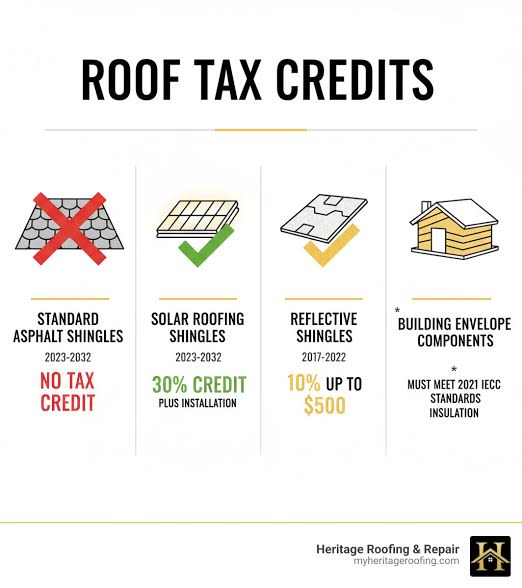
The short answer is yes, but with important caveats. You generally cannot claim a tax credit for a standard roof replacement using traditional asphalt shingles. However, if you install specific energy-efficient roofing materials, such as solar-integrated tiles or cool roofs that meet strict federal standards, you may qualify for substantial tax incentives. This guide will walk you through exactly what qualifies, how much you can save, and the steps to claim it in 2026.
Understanding the Difference: Tax Credit vs. Tax Deduction
Before diving into the specifics, it is crucial to understand the financial mechanism at play. Many homeowners confuse tax deductions with tax credits, but they impact your wallet very differently.
- Tax Deduction: Reduces your taxable income. If you are in the 24% tax bracket, a $1,000 deduction saves you $240.
- Tax Credit: Reduces your tax bill dollar-for-dollar. A $1,000 credit saves you exactly $1,000.
For roofing, we are primarily discussing the Energy Efficient Home Improvement Credit (formerly known as the Nonbusiness Energy Property Credit). This is a direct reduction of your tax liability, making it far more valuable than a simple deduction. According to the Internal Revenue Service, these credits are designed to encourage homeowners to upgrade to technologies that reduce energy consumption and greenhouse gas emissions.
What Roofing Materials Qualify for the 2026 Tax Credit?
Not every new roof is eligible. The IRS has specific criteria regarding energy efficiency. In 2026, the focus remains heavily on materials that actively contribute to reducing your home’s energy footprint.
1. Solar Roof Tiles and Shingles
If your new roof incorporates photovoltaic (PV) cells, it likely falls under the Residential Clean Energy Credit. This includes products like Tesla Solar Roof or GAF Energy solar shingles. These systems generate electricity, directly offsetting your utility bills.
2. Cool Roofs (Reflective Roofing)
“Cool roofs” are designed to reflect more sunlight and absorb less heat than a standard roof. To qualify, the material must meet the ENERGY STAR® program requirements. This typically includes:
- Specific metal roofing with reflective pigments.
- Certain tile and slate products treated with reflective coatings.
- Modified bitumen membranes for flat roofs.
Note: Standard asphalt shingles, even high-quality architectural ones, rarely meet the stringent reflectivity and emittance standards required for this specific credit unless they are part of a broader ENERGY STAR-certified system.
3. Insulation and Ventilation Upgrades
While not the “roof” itself, upgrading the insulation and ventilation in your attic during a roof replacement is often bundled into the same project. High-performance attic insulation and proper ventilation systems can qualify for separate credits under the home envelope improvements category.
How Much Money Can You Save?
The amount you can claim depends on the type of installation and the current tax laws effective in 2026. Under the Inflation Reduction Act provisions, which continue to influence 2026 tax filings, the credits are structured as follows:
| Improvement Type | Credit Percentage | Maximum Annual Credit |
|---|---|---|
| Solar Electric Property (Solar Roof) | 30% of cost | No annual cap (subject to phase-out after 2032) |
| Energy-Efficient Roofing (Cool Roof) | 10% of cost | Up to $500 per year |
| Attic Insulation/Ventilation | 10% of cost | Included in the $500 total limit |
Key Takeaway: If you install a full solar roof system costing $20,000, you could potentially claim a $6,000 tax credit. For a standard ENERGY STAR-rated metal cool roof costing $15,000, the credit would be capped at $500.
Step-by-Step Guide to Claiming Your Roof Tax Credit
Claiming your credit requires careful documentation. Follow these steps to ensure you do not miss out on your savings.
Step 1: Verify Product Eligibility
Before purchasing, ask your contractor for the Manufacturer’s Certification Statement. This document confirms that the specific product meets the IRS and ENERGY STAR requirements. Do not rely on verbal assurances; get it in writing.
Step 2: Keep Detailed Records
Save all receipts, invoices, and proof of payment. The invoice should clearly separate the cost of the roofing materials from labor if possible, although the credit usually applies to the total installed cost for energy property.
Step 3: File IRS Form 5695
When filing your 2026 federal tax return, you must complete Form 5695 (Residential Energy Credits).
- Part I is for the Residential Clean Energy Credit (Solar).
- Part II is for the Energy Efficient Home Improvement Credit (Cool roofs, insulation, etc.).
Step 4: Transfer the Credit to Form 1040
Once you calculate the credit on Form 5695, transfer the final amount to your Schedule 3 (Form 1040), line 1. This reduces your total tax liability.
Step 5: Retain Documentation
Keep all records for at least three years from the date you file your return. The IRS may request proof of eligibility during an audit.
Common Mistakes to Avoid
Even with the best intentions, homeowners often make errors that lead to rejected claims.
- Assuming All “Green” Roofs Qualify: Just because a roof is marketed as “eco-friendly” does not mean it meets the specific IRS technical standards. Always check for the ENERGY STAR label.
- Missing the Installation Date: The credit is based on when the installation was completed, not when you ordered the materials. Ensure your completion date falls within the 2026 tax year.
- Ignoring State-Level Incentives: While this article focuses on federal credits, many states offer additional rebates. Failing to stack these benefits means leaving money on the table.
FAQ Section
1. Can I get a tax credit for a standard asphalt shingle roof?
Generally, no. Standard asphalt shingles do not meet the energy efficiency requirements for the federal tax credit. However, if you add qualifying attic insulation or ventilation during the replacement, you may claim credits for those specific components.
2. Does the roof tax credit apply to rental properties?
No. The Energy Efficient Home Improvement Credit and the Residential Clean Energy Credit are specifically for primary residences. Rental properties and second homes do not qualify for these personal-use credits, though business-related depreciation rules may apply.
3. What if my tax liability is lower than the credit amount?
For the Residential Clean Energy Credit (solar), the credit is refundable in certain contexts or can be carried forward, but for the Energy Efficient Home Improvement Credit (cool roofs), it is non-refundable. This means it can reduce your tax bill to zero, but you will not receive a refund for the excess amount. However, unused portions of the clean energy credit may have different carryover rules depending on current legislation.
4. Do I need to itemize my deductions to claim this credit?
No. Tax credits are available regardless of whether you take the standard deduction or itemize your deductions. This makes them accessible to a wider range of taxpayers.
5. How long does the processing take?
Filing Form 5695 does not typically delay your refund unless the IRS selects your return for further review. Ensure all numbers match your supporting documents to avoid delays.
Conclusion
So, can you get a tax credit for a new roof? Yes, provided you choose the right materials. By opting for solar-integrated roofing or ENERGY STAR-certified cool roofs, you can significantly offset the cost of your investment through federal tax credits. In 2026, these incentives remain a powerful tool for homeowners looking to upgrade their homes while saving money.
Remember, the key is verification. Always confirm that your chosen materials meet IRS standards and keep meticulous records. Don’t let the complexity of tax forms deter you; the potential savings are well worth the effort.
If you found this guide helpful, please share it with friends or family who are planning home improvements. Helping others navigate these tax benefits can make a real difference in their financial planning!