Have you ever stood at the base of your house, ladder in hand, hesitating because you’re terrified of crushing your expensive aluminum gutters? You are not alone. Many homeowners struggle with how to put a ladder on a roof with gutters without causing costly damage or risking personal injury. This guide provides safe, professional techniques to protect both your home and yourself.
Why Proper Ladder Placement Matters
Before we dive into the mechanics, it is crucial to understand the stakes. According to the Consumer Product Safety Commission (CPSC), over 164,000 people are treated in emergency rooms annually for ladder-related injuries in the United States. A significant portion of these accidents stems from improper setup on uneven or fragile surfaces like roof edges.
Furthermore, gutters are not designed to bear weight. Most residential gutters are made from thin aluminum or vinyl. Placing a standard ladder directly against them can cause immediate denting, detachment from the fascia board, or even complete collapse. This leads to water damage, mold growth, and expensive repairs. By mastering the correct technique, you ensure structural integrity and personal safety.
Essential Tools for Safe Access
You cannot achieve a stable setup with just any ladder. Here is what you need:
- Extension Ladder: Ensure it is rated for your weight plus tools (Type I or IA).
- Ladder Stabilizer (Standoff): This is the most critical tool. It creates a bridge over the gutter.
- Gutter Guards/Protectors: Foam or rubber pads that sit inside the gutter channel.
- Level: To check ground stability.
- Helper: Never work alone when positioning heavy ladders.
Expert Tip: Invest in a high-quality ladder stabilizer. It pays for itself by preventing hundreds of dollars in gutter repair costs.
Step-by-Step Guide: How To Put A Ladder On A Roof With Gutters
Follow these precise steps to set up your ladder correctly. Rushing this process is the number one cause of accidents.
1. Inspect the Ground and Gutter Condition
Start at the base. The ground must be firm, level, and free of debris. If the soil is soft, use a wide board under the ladder feet to distribute weight. Next, inspect your gutters. Look for existing loose sections, rust, or cracks. If the gutters are already compromised, do not place any weight near them until they are repaired.
2. Apply the 4-to-1 Rule
This is the golden rule of ladder safety. For every four feet of height to the point where the ladder rests against the roof, the base should be one foot away from the wall.
- Example: If your eaves are 16 feet high, place the ladder base 4 feet away from the house.
- Why? This angle (approximately 75 degrees) ensures optimal balance and prevents the ladder from sliding out or tipping backward.
3. Install the Ladder Stabilizer
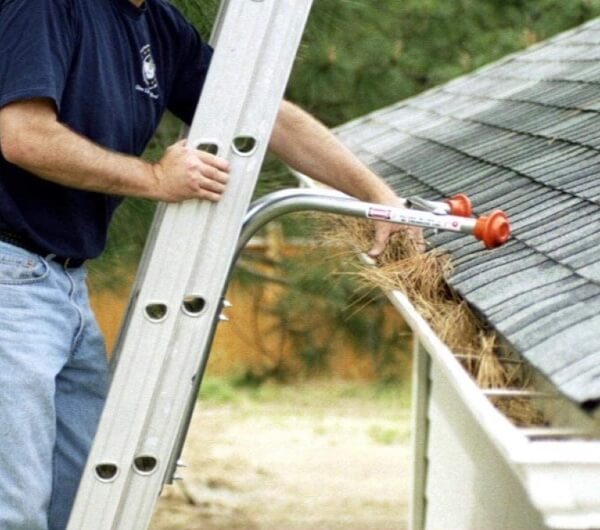
This is the core answer to how to put a ladder on a roof with gutters without damage. A stabilizer attaches to the top of your extension ladder. It features two arms that extend outward, creating a wider footprint.
- Attach the stabilizer securely to the ladder’s top rungs.
- Extend the arms so that the contact points rest on the roof shingles, not the gutter.
- The center of the stabilizer should hover over the gutter, leaving a gap of at least 2–3 inches. This ensures zero weight is transferred to the gutter system.
4. Use Gutter Protectors as a Backup
Even with a stabilizer, accidental bumps can happen. Slide foam or rubber gutter guards into the channel directly beneath where the ladder will pass. These act as shock absorbers. While they should not bear the main load, they provide an essential safety net against minor slips.
5. Raise and Secure the Ladder
With your helper holding the base, slowly raise the ladder. Walk it up hand-over-hand until the stabilizer arms rest firmly on the roof surface. Ensure the rubber feet of the stabilizer grip the shingles without tearing them. Once in position, secure the ladder base to prevent sliding. If possible, tie off the top of the ladder to a solid anchor point on the roof structure, not the gutter.
Common Mistakes to Avoid
Many DIY enthusiasts make critical errors that compromise safety. Here is a comparison of right vs. wrong practices:
| Practice | Correct Approach | Incorrect Approach |
|---|---|---|
| Contact Point | Ladder rests on roof/shingles via stabilizer | Ladder rests directly on gutter edge |
| Angle | 75-degree angle (4-to-1 rule) | Too steep (slips back) or too flat (bends) |
| Ground Base | Level, firm, possibly boarded | Uneven, muddy, or on gravel |
| Protection | Uses stabilizer + foam guards | No protection used |
Avoiding these mistakes significantly reduces the risk of injury and property damage. For more detailed safety standards, refer to the Occupational Safety and Health Administration (OSHA) guidelines, which are the gold standard for workplace safety in the US.
People Also Ask: Specific Scenarios
What if I don’t have a ladder stabilizer?
If you absolutely must proceed without a stabilizer, you are taking a higher risk. In this case, use thick wooden planks (2x4s) placed across the gutter and resting on the roof edge. Place the ladder on top of these planks. However, this method is less stable and not recommended for heights above 10 feet. Always prioritize buying a proper stabilizer.
Can I lean the ladder against the fascia board instead?
No. The fascia board is typically made of wood or composite material that is not designed to handle lateral pressure. Leaning a ladder against it can crack the board, detach the gutter mounting brackets, and cause the ladder to slip unexpectedly. Always aim for the roof surface itself.
How do I protect asphalt shingles from damage?
Standard ladder stabilizers come with rubberized feet to prevent scratching. However, if you are concerned about granule loss on older shingles, place a piece of plywood or a heavy-duty moving blanket between the stabilizer feet and the roof. This distributes the weight further and protects the roofing material.
Is it safe to use a step ladder on a roof?
Generally, no. Step ladders are designed for self-supporting use on flat ground. They are not meant to lean against structures. Using a step ladder on a roof edge is highly unstable and dangerous. Always use an extension ladder with proper stabilization for roof access.
FAQ Section
Q: How much weight can typical residential gutters hold?
A: Most aluminum gutters can support only 10–20 pounds of direct downward pressure before bending or detaching. This is far less than the weight of a person plus a ladder. Never rely on the gutter’s structural integrity.
Q: What is the best type of ladder for two-story homes?
A: For two-story homes, use a Type IA extension ladder rated for 300 pounds. Ensure it extends at least 3 feet above the roofline for safe transition onto the roof, as recommended by safety experts.
Q: Can rain affect ladder stability on a roof?
A: Yes. Wet shingles are extremely slippery. Avoid setting up ladders on roofs during or immediately after rain. If you must work in damp conditions, wear shoes with high-traction soles and ensure your stabilizer has aggressive rubber grips.
Q: How often should I inspect my ladder before use?
A: Inspect your ladder before every single use. Check for cracked rungs, loose rivets, damaged feet, and bent rails. A compromised ladder can fail catastrophically, regardless of how well it is positioned.
Q: What should I do if my gutters are already damaged?
A: If your gutters are loose or dented, do not attempt to place a ladder near them. Repair or replace the gutters first. Working around damaged structures increases the likelihood of sudden failure and injury.
Conclusion
Learning how to put a ladder on a roof with gutters is a vital skill for any homeowner. It protects your investment and, more importantly, keeps you safe. Remember the key takeaways: always use a ladder stabilizer, follow the 4-to-1 rule, and never let the ladder touch the gutter directly.
By following these steps, you can perform maintenance tasks with confidence and peace of mind. Don’t cut corners when it comes to safety. Invest in the right tools, take your time, and always prioritize stability over speed.
If you found this guide helpful, please share it with your friends and neighbors on social media. Helping others stay safe on their ladders is a small act that can make a big difference. Stay safe and happy home maintaining!