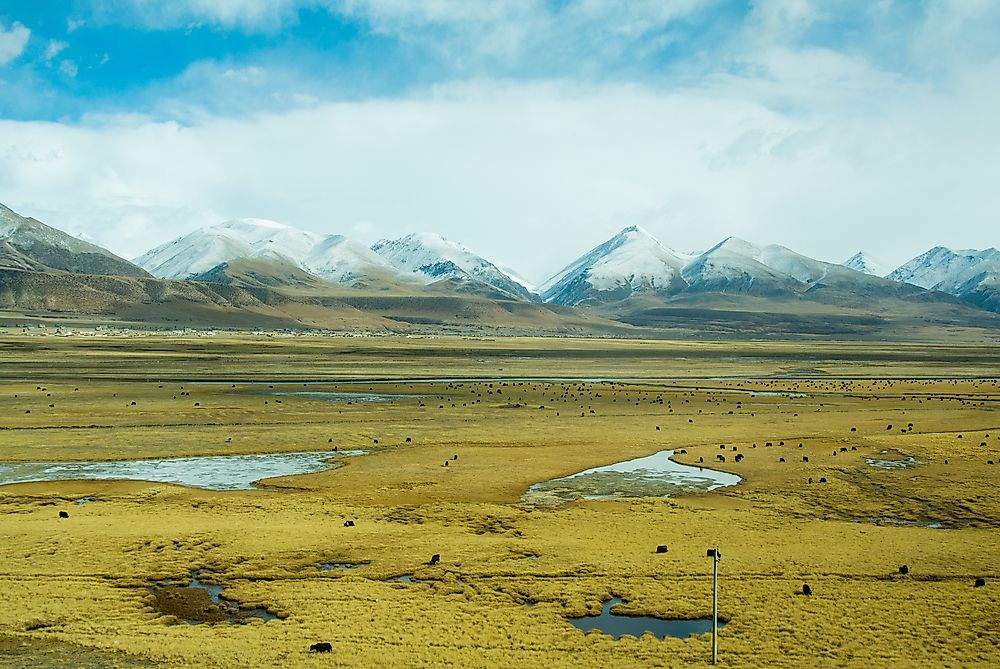
Have you ever looked at a map of Asia and wondered what lies behind those jagged, snow-capped lines? For many travelers and geography enthusiasts, this massive mountain range represents the ultimate frontier of nature’s power. You might have heard the poetic nickname, but understanding why are the Himalayas called the Roof of the World requires diving into geology, history, and sheer vertical magnitude.
This guide will break down the science and stories behind this iconic title. We will explore how these mountains formed, why they hold such spiritual significance, and what makes them distinct from other high-altitude regions. Whether you are a student, a trekker, or just curious about our planet, this article provides clear, authoritative answers.
What Does “Roof of the World” Actually Mean?
The phrase “Roof of the World” is not just a marketing slogan; it is a literal description of elevation relative to the rest of the planet. When we ask why are the Himalayas called the Roof of the World, we are referring to their status as the highest mountain range on Earth.
However, there is often confusion regarding which specific region holds this title. Historically, the term was also applied to the Pamir Mountains in Central Asia. Yet, in modern common usage, the Himalayas—and specifically the Tibetan Plateau they border—have claimed this moniker due to their unparalleled average altitude.
The Elevation Factor
To understand the “roof” analogy, consider the average elevation:
- Global Average Land Elevation: Approximately 840 meters (2,756 feet) above sea level.
- Himalayan Average Elevation: Over 6,000 meters (19,685 feet).
This drastic difference means that while most of the world lives on the “floor,” the Himalayas sit so high that they touch the sky. They act as a climatic barrier, influencing weather patterns for half the globe. This physical dominance is the primary reason for the nickname.
How Did the Himalayas Become So High?
The story of the Himalayas is one of the most dramatic geological events in Earth’s history. It wasn’t always the roof of the world; millions of years ago, this area was covered by an ancient ocean known as the Tethys Sea.
The Continental Collision
Around 50 million years ago, the Indian tectonic plate began moving northward at a rapid speed of about 15 centimeters per year. Eventually, it collided with the Eurasian plate. Unlike typical collisions where one plate slides under another (subduction), both plates were made of continental crust, which is too buoyant to sink deeply.
Instead, the land crumpled. Imagine pushing two rugs together on a floor; the fabric bunches up in the middle. That “bunching” created the Himalayan range. This process is ongoing. The Indian plate continues to push into Eurasia, causing the Himalayas to rise by approximately 5 millimeters per year.
Key Geological Facts
| Feature | Detail |
|---|---|
| Formation Start | ~50 Million Years Ago |
| Primary Cause | Collision of Indian & Eurasian Plates |
| Current Growth Rate | ~5 mm/year |
| Highest Peak | Mount Everest (8,848.86 meters) |
| Total Peaks >8,000m | 14 (All located in this region) |
This continuous uplift ensures that the Himalayas remain the highest point on the planet’s surface, solidifying their reputation as the roof.
Is the Tibetan Plateau Part of the Roof?
When discussing why are the Himalayas called the Roof of the World, it is impossible to ignore the Tibetan Plateau. Often referred to as the “Third Pole” due to its massive ice reserves, the plateau is the foundational base upon which the Himalayas sit.
While the Himalayas form the southern edge, the Tibetan Plateau covers an area of about 2.5 million square kilometers with an average elevation exceeding 4,500 meters (14,764 feet). Some geographers argue that the plateau itself is the true “roof,” while the Himalayas are the parapet or the railing.
For the general public, however, the two are inextricably linked. The visual grandeur of the Himalayan peaks rising sharply from the already high plateau creates the illusion of stepping onto the roof of the house. Without the plateau, the Himalayas would still be high, but they would lack the contextual elevation that makes them feel so detached from the rest of the world.
Cultural and Spiritual Significance of the Height
The title “Roof of the World” is not just physical; it is deeply spiritual. For centuries, the extreme altitude has isolated this region, allowing unique cultures to flourish in harmony with the harsh environment.
Sacred Peaks
In Hinduism and Buddhism, mountains are considered abodes of the gods. Mount Kailash, though technically part of the Trans-Himalaya, is revered as the center of the universe in four religions. The sheer height of these peaks symbolizes closeness to the divine. Pilgrims travel thousands of miles to walk around these bases, believing that the thin air brings them closer to enlightenment.
Isolation and Preservation
The difficulty of crossing the “roof” protected cultures in Tibet, Nepal, and Bhutan from outside invasion for centuries. This isolation preserved ancient traditions, languages, and architectural styles. Today, this cultural richness adds another layer to the nickname. It is not just a roof of stone and ice, but a roof of living heritage.
Comparison: Himalayas vs. Other Major Ranges
To truly grasp why this specific range holds the title, let’s compare it to other famous high-altitude regions.
- The Andes (South America): The longest continental mountain range in the world. While Aconcagua reaches 6,961 meters, the average height is significantly lower than the Himalayas.
- The Alps (Europe): Iconic and steep, but Mont Blanc only reaches 4,807 meters. They are more accessible and less extreme.
- The Rockies (North America): Majestic and vast, but their highest peak, Mount Elbert, is only 4,401 meters.
The Himalayas are unique because they contain all 14 of the world’s eight-thousanders (peaks over 8,000 meters). No other range comes close to this concentration of extreme altitude. This statistical dominance is the definitive answer to why are the Himalayas called the Roof of the World.
For more detailed geographical data on mountain formations, you can refer to Wikipedia’s entry on the Himalayas.
The Impact of Climate Change on the Roof
It is crucial to address a modern concern: the roof is melting. The Himalayas hold the third-largest deposit of ice and snow in the world, after Antarctica and the Arctic. These glaciers feed ten major river systems, including the Ganges, Indus, and Yangtze, supporting nearly 2 billion people.
Recent studies indicate that the Himalayas are warming three times faster than the global average. This rapid temperature rise threatens the structural integrity of the “roof.” Glacial lakes are expanding, increasing the risk of floods, while snow cover is receding. Understanding the fragility of this region is essential for anyone interested in its future.
FAQ Section
1. Why are the Himalayas called the Roof of the World instead of the Pamirs?
While the Pamir Mountains were historically called the “Roof of the World” by early explorers like Marco Polo, the Himalayas have surpassed this title in popular usage. This is due to the Himalayas containing Mount Everest and the majority of the world’s highest peaks, making them objectively higher and more prominent globally.
2. Is Mount Everest the only reason for the nickname?
No. While Everest is the highest point, the nickname refers to the entire range and the Tibetan Plateau. The average elevation of the region is what creates the “roof” effect, not just a single peak. The vast expanse of land above 4,000 meters is unique to this area.
3. Can regular tourists visit the “Roof of the World”?
Yes, but with precautions. Regions like Ladakh (India), Mustang (Nepal), and parts of Tibet are accessible to tourists. However, visitors must acclimatize properly to avoid Acute Mountain Sickness (AMS). It is recommended to ascend gradually and stay hydrated.
4. How does the height of the Himalayas affect the climate?
The Himalayas act as a massive barrier to cold winds from Central Asia, keeping the Indian subcontinent warmer. Conversely, they trap monsoon rains, causing heavy precipitation in South Asia. This climatic division is a direct result of their extreme height.
5. Are the Himalayas still growing?
Yes. Due to the ongoing collision between the Indian and Eurasian tectonic plates, the Himalayas continue to rise by approximately 5 millimeters every year. However, erosion from wind and water also wears them down, creating a dynamic balance.
Conclusion
So, why are the Himalayas called the Roof of the World? The answer lies in a combination of unmatched geological height, the vastness of the Tibetan Plateau, and their profound impact on global climate and culture. They are not just mountains; they are the highest continuous stretch of land on Earth, touching the stratosphere and shaping the lives of billions below.
From the crushing pressure of tectonic plates to the serene silence of ancient monasteries, the Himalayas represent the pinnacle of our planet’s physical beauty. As we face the challenges of climate change, preserving this “roof” becomes a responsibility for all of us.
If you found this exploration of the Himalayas fascinating, please share this article with your friends on social media. Let’s spread awareness about the majesty and fragility of the world’s highest peaks!