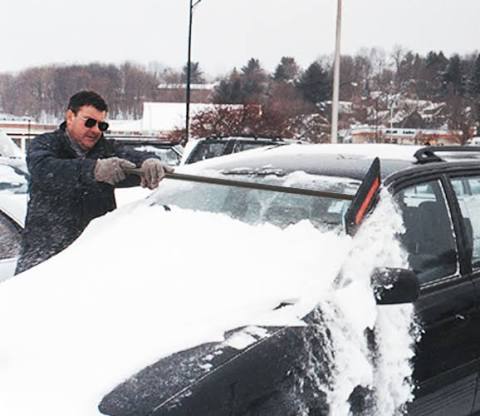
It is a chilly morning, you are running late, and your vehicle is buried under a fresh layer of white powder. You might be tempted to just clear the windshield and hit the road, but a critical question remains: Do you have to remove snow from roof of car? The short answer is yes, and ignoring this step can lead to dangerous accidents, hefty fines, and significant damage to your vehicle or others on the road.
Winter driving requires more than just good tires and caution; it demands full visibility and responsibility for your vehicle’s condition. In this guide, we will explore why clearing that snow is not just a chore, but a necessity for safety and legality. We will break down the laws, the physics of flying snow, and the best methods to clean your car efficiently without damaging the paint.
Why Is It Dangerous to Drive with Snow on Your Roof?
Many drivers assume that snow on the roof is harmless because it is not blocking their view. However, this misconception is one of the leading causes of winter-related multi-car pileups. When you accelerate, brake, or take a turn, the friction and aerodynamics change, causing large chunks of snow and ice to dislodge.
The “Snow Blindness” Effect
When snow slides off your roof while driving, it often lands directly on your windshield. This creates an instant blackout situation known as “snow blindness.” According to traffic safety studies, this sudden loss of visibility causes drivers to slam on their brakes instinctively. This reaction triggers a chain reaction, leading to rear-end collisions that could have been easily prevented.
Projectile Hazards
Snow does not always fall gently. At highway speeds, compacted snow and ice can become dangerous projectiles. A sheet of ice sliding off a SUV traveling at 60 mph can crack the windshield of the car behind it or cause a driver to swerve into another lane.
Expert Insight: Traffic safety experts compare driving with snow on your roof to driving with a loaded gun pointed at other motorists. It is an unpredictable hazard that endangers everyone on the road.
Is It Illegal to Drive with Snow on Your Car?
One of the most common questions we receive is about the legal implications. While laws vary by state in the US, the trend is moving toward stricter enforcement.
State-Specific Laws
Several states have enacted specific laws requiring drivers to clear snow and ice from their vehicles before driving. For example:
- New Jersey: Drivers can be fined up to $75 if snow or ice falls from their vehicle and causes injury or property damage.
- Pennsylvania: Similar laws exist, with fines ranging from $200 to $1,000 if the falling snow causes harm.
- Massachusetts & Connecticut: Both states have strict penalties for failing to clear snow, emphasizing public safety over convenience.
Even in states without specific “snow removal” statutes, you can still be cited for reckless driving or improper equipment if the snow obstructs your view or poses a danger to others. Police officers have the discretion to pull you over if they see a significant accumulation of snow on your roof.
For a broader understanding of how weather impacts traffic regulations, you can refer to general transportation safety guidelines on Wikipedia (note: while this link discusses DUI, it highlights the broader legal framework of responsible driving conditions).
How to Safely Remove Snow from Your Car
Removing snow properly is crucial to avoid scratching your paint or damaging your wipers. Here is a step-by-step guide to doing it right.
Step 1: Gather the Right Tools
Do not use household brooms or shovels with metal edges. Instead, use:
- A foam or soft-bristle snow brush.
- An ice scraper with a plastic blade.
- A microfiber towel for final wiping.
Step 2: Start from the Top
Always begin with the roof. If you start with the hood or trunk, you will likely knock snow onto areas you have already cleaned. Use long, gentle strokes to push the snow off the sides of the vehicle.
Step 3: Clear the Hood and Trunk
Once the roof is clear, move to the hood and trunk. Ensure that no snow is left near the edges where it could slide onto the windshield later.
Step 4: Don’t Forget the Lights and License Plate
Visibility is key. Make sure your headlights, taillights, and license plate are completely free of snow. This is not only a safety measure but also a legal requirement in most jurisdictions.
Step 5: Check the Wipers
Lift your wiper blades gently to ensure they are not frozen to the glass. Clear any snow from the base of the windshield to prevent it from being sucked into the wiper mechanism.
Common Mistakes to Avoid When Clearing Snow
Even well-intentioned drivers make mistakes that can damage their cars. Here is what you should avoid:
| Mistake | Consequence | Better Alternative |
|---|---|---|
| Using hot water | Can crack cold glass due to thermal shock. | Use lukewarm water or an ice scraper. |
| Scratching with stiff brushes | Micro-scratches on paint and glass. | Use soft foam brushes or dedicated car snow tools. |
| Ignoring the sunroof | Snow melts and leaks into the interior. | Clear the sunroof tracks and seals thoroughly. |
| Leaving engine running unattended | Increases risk of theft (“puffing”). | Stay with your vehicle while it warms up. |
What About Ice? Does It Need to Be Removed Too?
Yes, absolutely. Ice is even more dangerous than loose snow because it adheres tightly to the surface. When it breaks free, it does so in large, heavy sheets rather than light flakes.
If you encounter thick ice, do not chip at it aggressively. Use a de-icing spray or let your car’s defroster do the work. Pouring lukewarm water (temperature around 22–28°C) can help loosen thin layers of ice, but never use boiling water. Always follow up with a plastic scraper to remove residual ice from the windshield and windows.
FAQ Section
1. Do I have to remove snow from roof of car if I am only driving a short distance?
Yes. Even short trips can be dangerous. Snow can slide off during acceleration or braking, regardless of the distance. Additionally, police can pull you over immediately after you leave your driveway if your vehicle is not cleared.
2. Can I get a ticket if the snow falls off but doesn’t hit anyone?
In many states, yes. Laws in places like New Jersey and Pennsylvania penalize the act of driving with snow/ice on the vehicle, regardless of whether it causes an accident. The mere presence of the hazard is enough for a citation.
3. What is the fastest way to remove snow from a car?
The fastest method is using a high-quality, wide foam snow pusher. These tools allow you to clear large surfaces like the roof and hood in seconds. Avoid using hands or gloves, as this is inefficient and can lead to wet, cold hands.
4. Does my insurance cover damage caused by falling snow from my car?
If you cause an accident because snow fell from your roof, your liability insurance will likely cover the damages to the other party. However, your premiums may increase, and you could be found negligent. Comprehensive coverage may cover damage to your own car if another vehicle’s snow hits you, but fault determination can be complex.
5. Is it okay to let the car’s heater melt the snow?
While using the defroster is helpful for windows, relying on it to melt roof snow is inefficient and wasteful. It takes a long time, burns unnecessary fuel, and the melting snow can refreeze on colder parts of the car. Manual removal is faster and more effective.
6. What if my car has a panoramic sunroof?
Panoramic sunroofs require extra attention. Snow can accumulate in the tracks and seals, potentially causing leaks or mechanical issues when you try to open it. Ensure these areas are brushed clean and dry before operating the sunroof.
Conclusion
So, do you have to remove snow from roof of car? The answer is a resounding yes. It is a matter of legal compliance, personal safety, and communal responsibility. Taking the extra five minutes to clear your vehicle can prevent accidents, save you from fines, and protect your car’s paint job.
Remember, winter driving is a shared experience. By ensuring your vehicle is clean and safe, you contribute to safer roads for everyone.
Did you find this guide helpful? Share it with your friends and family on social media to help spread awareness about winter car safety. Let’s make this winter season safer for all drivers!