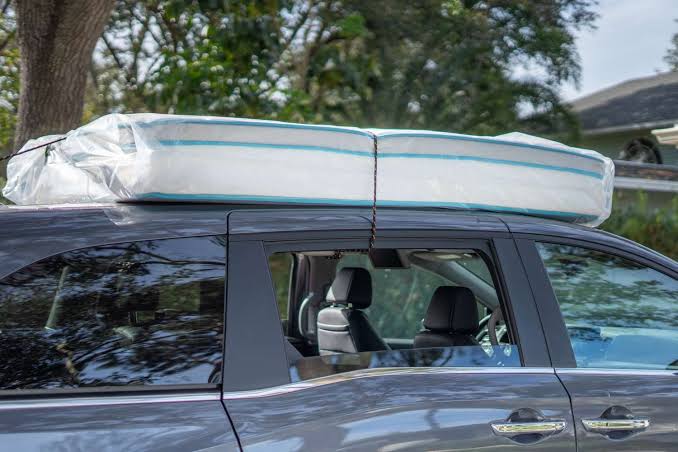
Moving day is often chaotic, expensive, and stressful. When you realize your new bed won’t fit in the back of your SUV, panic sets in. You don’t need a rental truck; you just need to know how to tie a mattress to a car roof rack correctly to save money and time.
Transporting large items on your vehicle’s roof is a common practice, but it carries significant risks if done improperly. A loose mattress can become a dangerous projectile on the highway, endangering you and other drivers. This guide will walk you through the exact steps to secure your mattress safely, ensuring it arrives at your destination intact and without causing accidents.
Why Properly Securing Your Mattress Matters
Before we dive into the knots and straps, it is crucial to understand the physics involved. At 60 mph, wind resistance creates massive lift and drag forces. If your mattress is not aerodynamically positioned and tightly secured, it can shift, tear, or even fly off.
According to traffic safety studies, unsecured loads are a leading cause of preventable highway accidents. By taking ten extra minutes to secure your load properly, you are not just protecting your property; you are practicing responsible driving. The goal is zero movement. If the mattress shifts even an inch during transit, it is not tight enough.
Essential Gear: What You Need Before You Start
You cannot secure a mattress with hope and good intentions. You need the right tools. Using bungee cords alone is a common mistake; they stretch over time and can snap under high wind pressure.
Here is your checklist:
- Ratchet Straps or Cam Buckle Straps: These are non-negotiable. Ratchet straps provide high tension, while cam buckles are easier to use for lighter loads. Aim for straps with a breaking strength of at least 1,500 lbs.
- Heavy-Duty Rope (Optional): If you lack straps, use polypropylene rope with a diameter of at least 3/8 inch. Avoid cotton rope as it stretches when wet.
- Mattress Bag or Tarp: This protects the mattress from road debris, rain, and wind friction.
- Scissors or Knife: To trim excess strap length.
- Gloves: To protect your hands from friction burns and dirt.
| Item | Recommended Type | Why It Matters |
|---|---|---|
| Straps | Ratchet or Cam Buckle | Provides consistent tension without stretching. |
| Cover | Plastic Mattress Bag | Prevents tearing from wind friction and keeps it clean. |
| Padding | Old Towels or Foam | Protects car paint and prevents strap slippage. |
Step-by-Step Guide: How to Tie a Mattress to a Car Roof Rack
Follow these precise steps to ensure a secure fit. We assume you have a standard crossbar roof rack. If you have a bare roof, you must use soft racks or door anchors, which require different techniques.
Step 1: Prepare the Mattress
Clean the mattress if necessary and let it dry completely. A wet mattress is heavier and more prone to mold. Place the mattress inside a heavy-duty plastic bag. Seal the bag tightly with packing tape. This step is critical because wind friction against the fabric surface of a mattress can shred it within miles. The plastic bag reduces drag and protects the material.
Step 2: Position the Mattress on the Rack
Lift the mattress onto the roof rack. Center it perfectly between the left and right sides of your vehicle. An off-center load affects your car’s handling and increases wind resistance on one side.
- Orientation: Place the mattress flat, with the largest surface area facing down against the crossbars. Do not stand it on its side unless absolutely necessary, as this creates a “sail” effect that is difficult to control.
- Overhang: Ensure the mattress does not extend more than 3 feet beyond the front or rear of your vehicle, complying with most US state laws regarding overhanging loads.
Step 3: Secure the Center Straps
Take your first ratchet strap. Loop it over the mattress and under the crossbar. Pull the strap tight by hand before engaging the ratchet mechanism.
- Tightening: Crank the ratchet until the strap is taut. You should not be able to slip your fingers easily under the strap.
- Placement: Place one strap near the front third of the mattress and another near the rear third. Avoid placing straps directly in the center, as this can cause the mattress to bow or bend excessively.
Step 4: Add Diagonal Support (The X-Pattern)
For maximum stability, create an “X” pattern using two additional straps or ropes. Run one strap from the front-left corner of the mattress to the rear-right anchor point of your roof rack. Repeat for the other diagonal.
This technique prevents the mattress from sliding forward, backward, or side-to-side. It distributes the tension evenly across the entire load. According to engineering principles, diagonal bracing significantly increases structural rigidity in dynamic environments like moving vehicles.
Step 5: Check for Aerodynamics and Flapping
Walk around your vehicle. Look for any loose ends of straps or flapping plastic. Trim excess strap length and tape down any loose plastic edges. Flapping materials create noise and can weaken the securing points over long distances.
For more information on load safety standards, you can refer to general transportation guidelines on Wikipedia.
Common Mistakes to Avoid
Even with the right gear, errors happen. Here are the most frequent pitfalls:
- Using Only Bungee Cords: Bungees stretch. As soon as you hit the highway, the wind lifts the mattress, stretching the bungees further until the load becomes loose. Always use non-stretch straps.
- Ignoring Wind Direction: If possible, position the mattress so the smoothest side faces the wind. This reduces lift.
- Not Checking Mid-Trip: Straps can settle after the first few miles. Stop at a safe location after 10–15 minutes of driving to re-tighten all straps.
- Damaging Car Paint: Placing straps directly on the car’s bodywork can scratch the paint. Use towels or foam padding between the strap hooks and your car’s anchor points.
FAQ: Frequently Asked Questions
Can I tie a mattress to my car without a roof rack?
Yes, but it is riskier. You can use “soft racks” or foam blocks that sit on the roof, with straps running through the car’s interior (out the doors and windows). However, this method requires extreme caution to avoid damaging door seals and ensures the straps do not interfere with window mechanisms. Always consult your vehicle’s manual before attempting this.
Is it legal to transport a mattress on my roof?
In most US states, it is legal provided the load is securely fastened and does not obstruct your view or license plate. However, if the mattress extends more than 3–4 feet beyond the vehicle, you may need to attach a red flag or light to the end. Check your local Department of Transportation regulations for specific limits.
What if it starts raining during the trip?
If you used a plastic mattress bag and sealed it well, your mattress should stay dry. If you didn’t use a bag, stop safely and cover the mattress with a waterproof tarp. Secure the tarp with additional straps or bungees. Driving with a soaked mattress is dangerous due to the added weight and potential for shifting.
How fast can I drive with a mattress on the roof?
Keep your speed below 60 mph. High speeds increase wind lift exponentially. Driving slower reduces stress on the straps and improves your vehicle’s stability. Avoid sudden braking or sharp turns, as the added weight on the roof raises your car’s center of gravity.
Can I transport a box spring and mattress together?
It is not recommended. Stacking them creates a tall, unstable load that catches too much wind. It is safer to transport them separately or place the box spring inside the vehicle if it fits. If you must stack them, bind them together tightly with shrink wrap or multiple straps before securing them to the roof.
Conclusion
Learning how to tie a mattress to a car roof rack is a valuable skill that saves you money and hassle. By using the right equipment—specifically ratchet straps and protective covers—and following a systematic approach, you can transport your bed safely. Remember, the key is tension and redundancy. Never rely on a single strap, and always double-check your work before hitting the highway.
Your safety and the safety of others on the road depend on a secure load. Take your time, follow these steps, and drive cautiously. If you found this guide helpful, please share it with friends who might be planning a move. Safe travels!