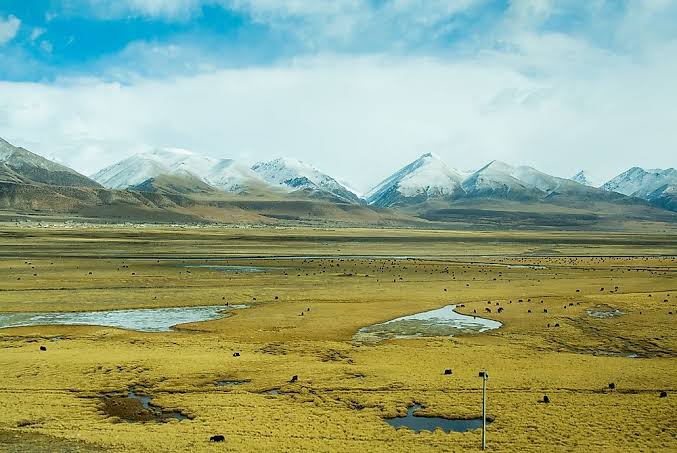
Have you ever gazed at a map of Asia and wondered about the massive, elevated expanse that dominates the center of the continent? It is a region so high and remote that it has captured the imagination of explorers, poets, and geographers for centuries. If you have found yourself asking, “What country is known as the Roof of the World,“ you are not alone; this is one of the most common geographical questions for travelers and students alike.
The answer, however, is slightly more nuanced than a single modern border line. While often associated with specific nations, the title primarily refers to a geographic region rather than a political entity. In this comprehensive guide, we will unpack the history, geography, and cultural significance of this majestic highland, ensuring you understand exactly where this “roof” is located and why it matters.
The Primary Answer: Tibet and the Pamir Plateau
When people ask what country is known as the roof of the world, the most immediate and historically accurate answer is Tibet. However, because Tibet is an autonomous region within the People’s Republic of China, the political answer can sometimes cause confusion. Additionally, the term has historically been applied to the Pamir Mountains in Central Asia.
Why Tibet Holds the Title
Tibet is situated on the Tibetan Plateau, which is the highest and largest plateau in the world. With an average elevation exceeding 4,500 meters (14,800 feet), it is often referred to as the “Third Pole” due to its extensive ice cover and harsh climate.
The term “Roof of the World” was popularized in the 19th century by European explorers who were awestruck by the sheer altitude and inaccessibility of the region. Unlike other mountain ranges that are linear, the Tibetan Plateau is a vast, elevated tableland. This unique topography creates a barrier that influences weather patterns across the entire Asian continent, including the monsoon systems that affect India and Southeast Asia.
The Pamir Mountains Connection
It is important to note that before the Tibetan Plateau became widely known to the West, the term was often used to describe the Pamir Mountains. Located at the junction of several major mountain ranges—including the Tian Shan, Karakoram, Kunlun, and Hindu Kush—the Pamirs are situated primarily in Tajikistan, but also extend into Afghanistan, China, and Pakistan.
Russian explorers in the 19th century frequently referred to the Pamirs as the Bam-i-Dunya (Persian for “Roof of the World”). Today, while Tibet is the more common association in popular culture, geographers recognize both regions as holding this prestigious titular crown.
Geographic Breakdown: Understanding the Elevation
To truly understand why this region holds such a formidable reputation, we need to look at the hard data. The elevation here is not just high; it is statistically anomalous compared to the rest of the planet.
| Feature | Tibetan Plateau | Pamir Mountains | Average Continental Elevation |
|---|---|---|---|
| Average Height | ~4,500 meters (14,800 ft) | ~4,000 meters (13,000 ft) | ~840 meters (2,750 ft) |
| Highest Peak Nearby | Mount Everest (8,848 m) | Kongur Tagh (7,649 m) | Varies significantly |
| Area | ~2.5 million km² | ~120,000 km² | N/A |
| Primary Countries | China (Tibet), India, Nepal | Tajikistan, Afghanistan, China | N/A |
As shown in the table above, the scale of the Tibetan Plateau is immense. It covers an area roughly four times the size of France. This vastness contributes to its ability to act as a climatic driver for half the planet.
Why Is It Called the Roof of the World?
The nickname is not merely poetic; it is descriptive of the region’s physical relationship to the surrounding lands. Here are the three main reasons this title persists:
- Extreme Altitude: It is the highest large-scale landmass on Earth. When you stand on the plateau, you are literally closer to the stratosphere than almost anywhere else.
- Source of Major Rivers: The region acts as a water tower for Asia. Major rivers including the Yangtze, Yellow River, Mekong, Salween, Brahmaputra, and Indus all originate here. Just as a roof sheds rain, this plateau sheds water that sustains billions of people downstream.
- Inaccessibility: Historically, the rugged terrain and thin air made it nearly impossible for outsiders to penetrate. It sat “above” the civilized world, much like a roof sits above a house.
Political Context: Which Modern Countries Are Involved?
Since the question “What country is known as the roof of the world” often seeks a modern political answer, we must clarify the current geopolitical landscape. The region spans several borders.
- China: The majority of the Tibetan Plateau is administered as the Tibet Autonomous Region (TAR) and parts of Qinghai Province.
- India: The northern regions of Ladakh and Sikkim are part of the greater Himalayan and Tibetan geological zone.
- Nepal and Bhutan: These nations sit on the southern edge of the plateau, acting as gateways to the high Himalayas.
- Tajikistan, Afghanistan, Pakistan, and Kyrgyzstan: These countries share the Pamir Mountain range, the other contender for the title.
For most general knowledge purposes, if you must name one country, China is the sovereign state that governs the largest portion of the area commonly referred to as the Roof of the World (Tibet). However, acknowledging the transboundary nature of the Pamirs is crucial for geographical accuracy.
The Impact of Climate Change on the “Roof”
In recent years, the “Roof of the World” has become ground zero for climate change discussions. According to various scientific studies, the Tibetan Plateau is warming at twice the global average rate. This has severe implications:
- Glacial Melt: Glaciers in the Himalayas and Kunlun mountains are retreating rapidly.
- Water Security: Changes in snowmelt patterns threaten the water supply for over 1.5 billion people in Asia.
- Ecosystem Shifts: The fragile alpine meadows are experiencing desertification, impacting local wildlife such as the snow leopard and the Tibetan antelope.
Understanding the fragility of this region adds a layer of urgency to our appreciation of it. It is not just a static monument of rock and ice; it is a dynamic, changing system that affects us all.
Travel Considerations: Visiting the Roof of the World
If you are inspired to visit this majestic region, preparation is key. The environment is harsh, and the logistics can be complex.
Health and Acclimatization
Altitude sickness is a real danger. Most travelers fly into Lhasa (3,656 meters) or drive in from lower elevations.
- Step 1: Spend at least 2–3 days acclimatizing in a moderate altitude city before ascending higher.
- Step 2: Stay hydrated. Drink at least 3–4 liters of water daily.
- Step 3: Avoid alcohol and strenuous exercise for the first 48 hours.
Permits and Regulations
Traveling to Tibet requires special permits beyond a standard Chinese visa.
- Tibet Travel Permit: Issued by the Tibet Tourism Bureau.
- Aliens’ Travel Permit: Required for visiting areas outside Lhasa.
- Guided Tours: Independent travel is generally not permitted for foreign tourists; you must book through a licensed agency.
For more detailed historical context on the region’s exploration, you can refer to Wikipedia’s entry on the Tibetan Plateau, which provides an extensive overview of its geological formation and human history.
FAQ Section
1. Is Nepal known as the Roof of the World?
No, Nepal is not typically called the Roof of the World. While Nepal contains eight of the world’s ten highest peaks, including Mount Everest, the term “Roof of the World” specifically refers to the vast high-altitude plateaus of Tibet and the Pamirs. Nepal is often referred to as the “Home of the Highest Peaks.”
2. What is the difference between the Tibetan Plateau and the Pamir Mountains?
The Tibetan Plateau is a massive, flat highland covering 2.5 million square kilometers, primarily in China. The Pamir Mountains are a knot of high mountain ranges located mainly in Tajikistan. Both are high, but the Plateau is defined by its breadth and average elevation, while the Pamirs are defined by their rugged, peaked terrain.
3. Can anyone visit the Roof of the World?
Yes, but it requires planning. For the Tibetan side, foreign visitors need special permits and must travel with a guided tour. For the Pamir side (Tajikistan), visitors need a GBAO permit to enter the mountainous regions. Physical fitness and health clearance for high-altitude travel are recommended.
4. Why is the air thinner at the Roof of the World?
Air pressure decreases with altitude. At 4,500 meters, the atmospheric pressure is roughly 60% of what it is at sea level. This means there are fewer oxygen molecules per breath, which is why visitors often experience shortness of breath or altitude sickness.
5. Does the term “Roof of the World” apply to any other place?
Occasionally, the Andes in South America or the Ethiopian Highlands have been poetically referred to in similar terms, but in standard geographical and historical usage, “Roof of the World” is exclusively reserved for the Tibet-Pamir region in Asia.
Conclusion
So, what country is known as the roof of the world? While the title technically belongs to a geographic region rather than a single nation, it is most commonly associated with Tibet (administered by China) and the Pamir Mountains (spanning Central Asia). This region is not just a marvel of natural beauty; it is a critical ecological engine for the entire Asian continent.
Whether you are drawn to the spiritual heritage of Tibetan Buddhism, the thrill of high-altitude trekking, or the intricate geopolitics of Central Asia, the “Roof of the World” offers a profound perspective on our planet. It reminds us of the Earth’s raw power and the delicate balance of our global climate.
If you found this guide helpful, please consider sharing it with your fellow travel enthusiasts or geography buffs on social media. Understanding our world is the first step toward protecting it!
Leave a Reply